
July Reccos
Four books and two shows


Thanks to this year’s Booker longlist, I’ve had a mini existential crisis. I could swear I started reading Audition by Katie Kitamura and Universality by Natasha Brown, but for the life of me, I can’t remember anything about either book. Also, how did I have no idea that Kiran Desai has a new novel out? Ans: Because it isn’t really out out. The Loneliness of Sonia and Sunny will come out in September. Possibly around the time that the shortlist is announced. Put your cynic hat on if you want, but prizes are primarily about publicising books. The quality of the lobbying campaign is often more relevant than the quality of the book. Nothing else explains Our Evenings by Alan Hollinghurst not making the cut. I’ll write about it properly when I finish reading it, but this one already feels like a strong contender for one of my best reads of 2025. (Definitely try to avoid evil corporations like Amazon if you can and instead support your local indie bookstore, but that said, the Kindle version is just Rs. 280!)
I hesitate to wave dismissively at Audition and Universality because in the contest of July vs My Brain, most rounds have ended with Brain being knocked out. It might have helped if I’d noted down my thoughts on the two novels before abandoning them, but for that, I needed my planner. Which I didn’t have because I hadn’t made one.
Back in the ye olde days of the Covid-19 pandemic, when time turned into a Mobius strip, I started making my own planner-journal (mostly because it was a good excuse to spend stupid amounts of money on washi tapes and scrapbooking material). At the end of making numerous mathematical errors, fixing them (only to find I’ve made new mistakes, because that’s life. Also, that’s me doing maths) and washi-taping the heck out of pages, it was very satisfying to have a notebook that was customised for me, with space for all my stuff — books read, movies and shows watched, ticket stubs, deadlines, doodles, meetings, etc.
Since then, I’ve been making these planner-journal things every year. Twelve months usually require two notebooks and in addition to supporting Indian retail and Japanese stationery imports, my notebooks are a handy record + reference I can turn to if I want to know, for instance, which books I read in which month, and what struck me about them while reading.
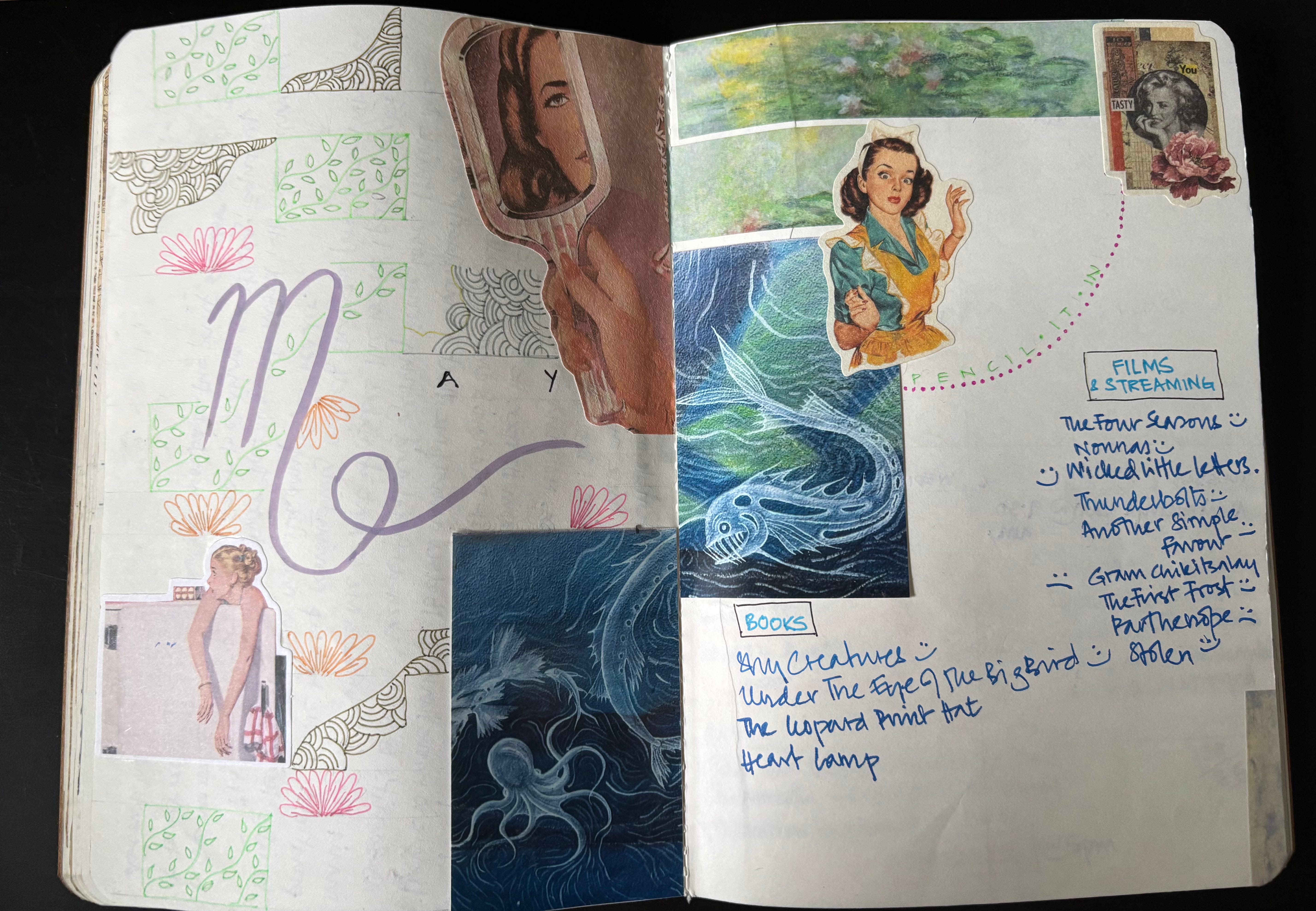
This year, when I should have pulled out a notebook and made my planner-journal for the second half of 2025, I procrastinated. Next thing I know, June is ending; I am hurtling into a July that feels like a Mexican wave of disasters and bad news; and my notebook is as blank as it was on the day it was bound. All I have on record for July are fever readings, doctors’ appointments, appointments for medical tests, and barely-legible notes and prayers, written while functioning on two-odd hours of sleep. All other work was set aside because my father fell sicker than he has been in a long time. But he got better, slowly and determinedly. As he clawed his way back to better health, I got a little hug from the universe when it sent some wonderful books and shows my way.
Since my memory is awful enough to give a fruit fly superiority complex, I figured I’d use the newsletter to jot down what I do remember of my July reads. It’s not a long list, but it’s a good one. So without further ado, here we go.
The World With Its Mouth Open, by Zahid Rafiq
Set in Kashmir and written in prose that is almost clinical in its precision, this volume of short stories is compelling and deeply disturbing. There’s a eerie quietness to the world in which they unfold. Characters go about doing everyday things, like going to tuition or visiting a doctor. Only in Kashmir, there’s no such thing as ‘normal’ and even the most banal details wobble with an instability rooted in despair and uncertainty. Rafiq’s fiction has no interest in tropes like contrasting the beautiful landscape with man-made ugliness. Neither does he give his reader lessons in history and human rights. Instead, The World With Its Mouth Open trains its gaze on the facades that a traumatised society puts up in an effort to feel normal. These stories show the reader how violence has warped the ordinary out of shape. I couldn’t stop reading this book, pausing only to remind myself that I was reading a story and there was no need for me to hold my breath.
On the Banks of the Pampa, by Volga, translated by Purnima Tammireddy
“The darkness in the forest was so dense that not even dawn could dispel it entirely” — as opening lines go, this one is perfect. On the Banks of the Pampa is Volga’s retelling of the story of Sabari from the Ramayana. Sabari is a minor character in the epic, conventionally held up as an example of unquestioning devotion and used to make Ram look a little more awesome. Volga’s Sabari is much more; and if you’ve read The Liberation of Sita, it won’t surprise you to know that at the end of his encounter with Sabari, Ram’s aura is more than a little dimmed. This Sabari is a survivor and a custodian of ancient wisdom, she is a hero in her own right. But the darkness is dense, and not even the extraordinary Sabari can dispel it. Through Sabari and her guru Matanga, Volga delivers a sharp takedown of what is often described as “development” and the caste hierarchy. She also offers redemption to Kaikeyi, who is usually pegged as a villain. In Volga’s retelling, the queen is reduced to a pawn and the Machiavellian mastermind is Vashishtha, one of the great Saptarshis. It’s a slim book, but it’s packed with ideas and idealism.
The Elsewhereans, by Jeet Thayil
When I first read this book was “a genre-defying novel that melds fiction, travelogue, memoir, a ghost story, a family saga, photographs and much else”, my eyes rolled much like the knee jerks when it’s being checked for the patellar reflex. I ended up picking it up for the wrongest of reasons: the book fit perfectly into the bag I was carrying and my hair looked exactly like that of the woman on the cover of The Elsewhereans. Fortunately, The Elsewhereans is much more than these superficial details. Once I flipped to the first page, I couldn’t stop reading and then, when I realised where Thayil was going to end his book, I slowed down as much as I could, grieving and celebrating with every word I read. At its best, The Elsewhereans is a hauntingly beautiful portrait of a marriage between two remarkable, complicated people and a travelogue that travels through time and across seas. If you’ve never read Jeet Thayil before and are not in the mood for poetry, this is an excellent introduction to his prose. While it does have some discordant moments — the ghost story bit, for example, feels like a wasted token even though it had the potential to be much more than a stray, suspended detail — for most part, The Elsewhereans flows with elegant ease. The novel is at its weakest and most self-indulgent whenever the grown-up Thayil enters it without his parents, but those tangents didn’t really stay with me. It’s when Thayil writes of Ammu Thomas and Thayil Jacob Sony George that he is on song, and his ability to pick the perfect vignettes out of a lifetime of memories, questions and resentments is awe-inspiring. Warning: Early on in The Elsewhereans, there’s a description of a wedding feast that made me search for “Kerala food” on Zomato and reach for Gelusil simultaneously. All in all, not a perfect book, but utterly charming.
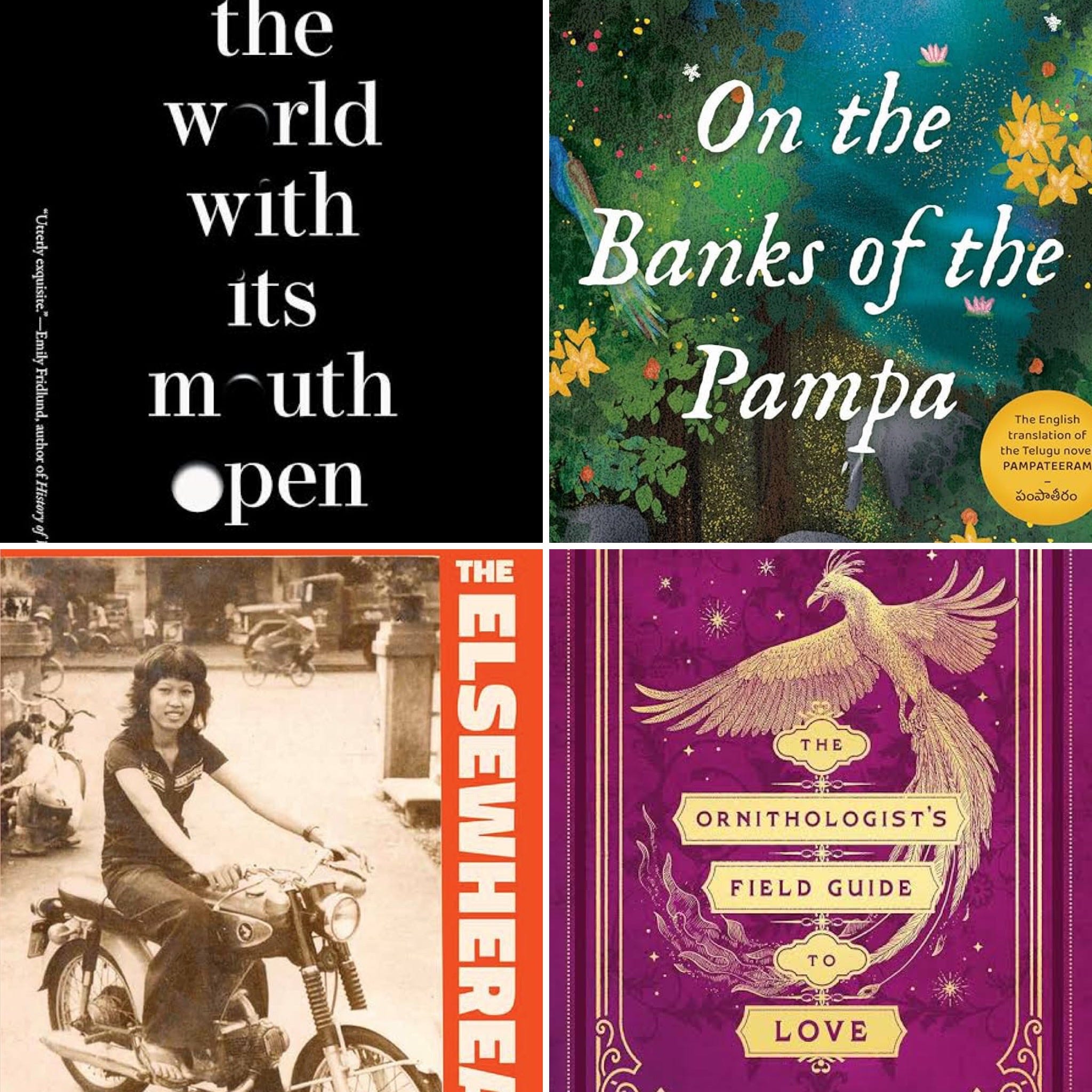
The Ornithologist’s Field Guide to Love, by India Holton
India Holton writes rom-com for literature nerds, and I am here for it. I zipped through pretty much all of her fantasy rom-coms and they’re all varying degrees of fun, but this one is particularly delightful. The Ornithologist’s Field Guide to Love is a classic enemies-to-lovers romance, set in Victorian England, with a sprinkling of Indian Jones-flavoured quests and so. many. puns. There is barely one sane moment in this bonkers book, which also has the most fabulous flock of fictional birds including one called the thunder-winged loon. Holton’s writing reminded me of the winsome Amelia Peabody series (which I really should re-read. They’re complete joy). In short, this one’s perfect for those times when the only thing to do with reality is to escape it.
I don’t usually do this, but I’m going to end with two show recommendations, both of which have a connection to books and writing.
The Hunt: The Rajiv Gandhi Assassination Case
The title tells you what this show is about. It’s based on Ninety Days: The True Story of the Hunt for Rajiv Gandhi’s Assassins by Anirudhya Mitra. I haven’t read the book, but Nagesh Kukunoor’s show was a very good watch. It’s one of those rare shows which I think might have benefited from being a little longer and less ruthlessly tight in its focus. Yes, there’s some overacting and a few awkward bits, but The Hunt holds the viewer’s attention. The casting is excellent, with actors looking credibly like the characters they play and production design that rarely feels artificial. Bureaucrats in safari suits, the hierarchy of a government office, security officials whose body language goes from loose-limbed to threatening in the blink of an eye, the steady gaze of a young woman who is ready to die for her politics — The Hunt is one of the best procedurals I’ve seen in Indian streaming. Also, the show’s closing monologue is magnificent.
A Dream Within a Dream
Not the poem Edgar Allan Poe, but the Chinese drama written by Ren Zhang Liu and starring Li Yitong and Liu Yuning. This is the first time I’ve watched all 40 episodes of a C-drama and felt the script made good use of every single episode. A Dream Within a Dream begins with an actress reading the script of the drama in which she’s been cast as a tragic female lead. After grumbling about the tropes and the incoherent misogyny in the story, the actress nods off to sleep and wakes up to find herself in the world of the drama. Her first task is to change the storyline so that her character doesn’t die or fall into the hands of the odious male lead. However, that turns out to be much more complicated (and funnier) than she’d expected.
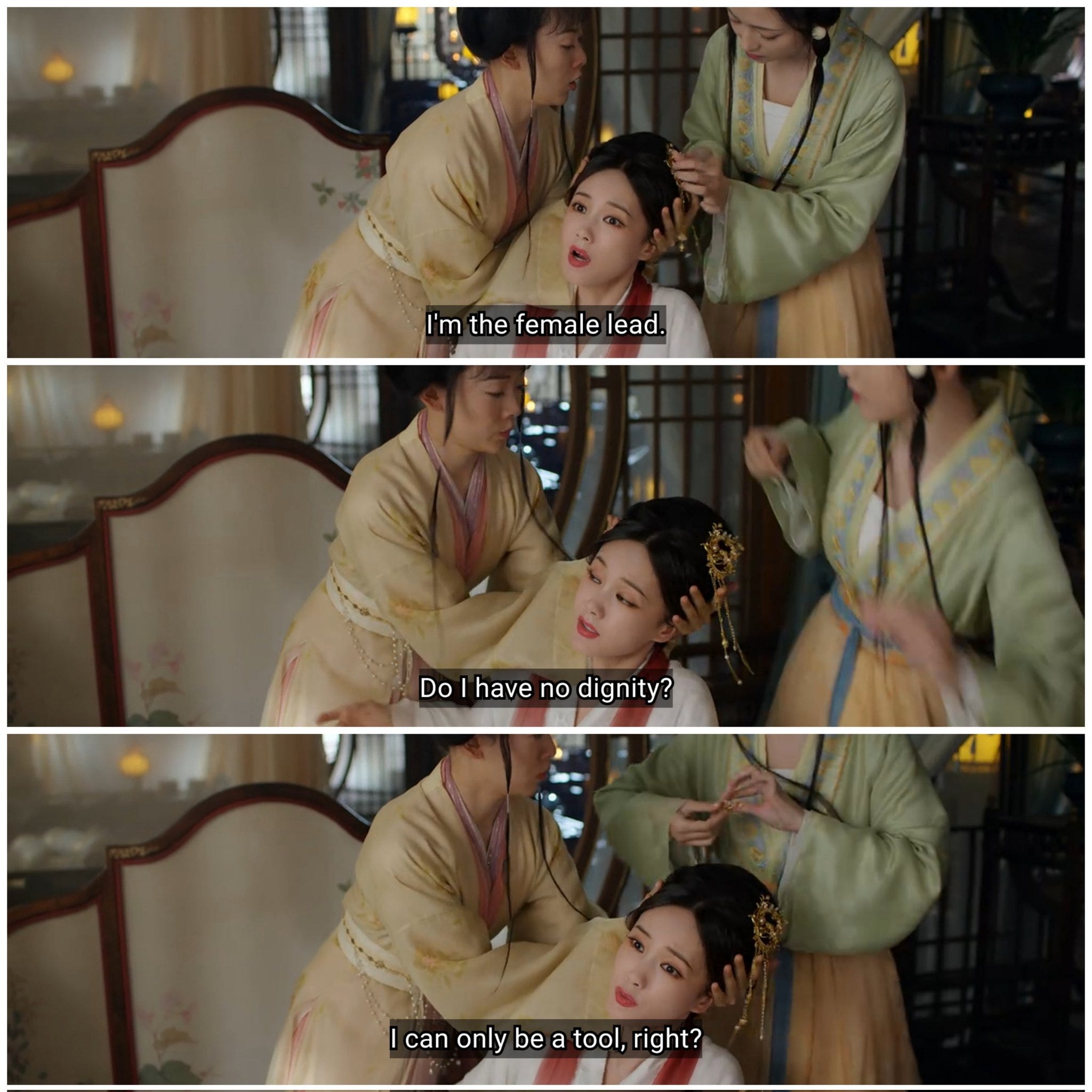
While the first half of A Dream With a Dream plays with a familiar combination of court politics and romance, the second part is a meditation upon writing packaged in a flurry of action. What makes for a well-written character? What does agency mean? What does a writer owe a character they’ve created? How does the imagination affect the real? Can the imaginary have a real impact on the way we think? I loved how this show explored all this metaphorically and literally while also being funny, sweet and doing all the things expected of a drama. The female lead Song Xiaoyu/ Song Yimeng is one of the most delightful heroines you’ll encounter and gods above, that Liu Yuning! I could watch him stride around in slow-mo, in those floaty Chinese robes, all damn day… .
So that’s all I have for you this time. Here’s hoping August is kinder than July was. Take care, stay well, and thank you for reading. Dear Reader will be back soon.
Can’t wait to read Jeet’s book
Lovely roundup. I must try out the Amelia Peabody series. I keep adding books I want to read on a pile and never get to them. Sigh. I had no idea about the Kiran Desai book until it started showing up on my feed a while before the Booker longlist was announced. Hope your father is feeling better,